
Humanoid robotics patents that matter cover subsystems: actuators, hands, sensors, and locomotion, the interface where broad, novel claims still live.
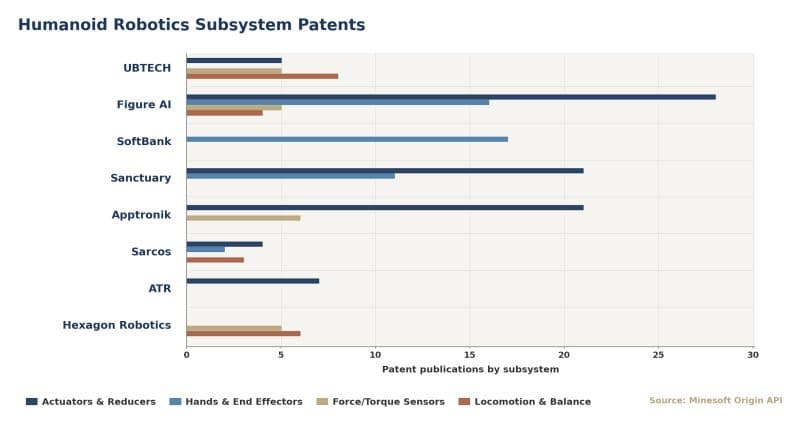
The real patent race in humanoid robotics is not about overall systems. It is about the actuators, hands, sensors, and locomotion systems inside them.
Humanoid robots require specialized engineering at every joint, fingertip, and footstep, and no integrator builds all of it in-house. The companies that have filed are staking out different subsystem positions, but several of the largest market entrants have barely filed at all. Tesla is targeting one million Optimus robots in 2026 and ten million by 2027. As production scales to those numbers, IP gaps become licensing obligations.
The bigger opportunity is not whether to file, but where. Humanoid robots must operate in a world built for human hands, human feet, and human-scale movement. That overlap between a robot’s subsystems and real-world human functionality is where broad, novel patents live. Hands that open packaging, feet that navigate stairs, and fingertips with retractable features that exceed human capability are functional inventions at the interface of machine and environment. Most of them have not been filed yet.
The companies patenting those real-world functional solutions will own the licensing leverage in this market.
The window is still open.

Deciding where to file is an IP strategy question, not only an engineering one. Talk with ipCapital Group about mapping the subsystem white space in humanoid robotics and staking novel patent positions before the window closes.
Work with ipCapital Group
From invention to monetization, our team has guided 2,000+ engagements across the full IP lifecycle. Start with a free 30-minute discovery call.

Written by
John Cronin