
By: John Cronin Executive Summary Background The intellectual property landscape has always mirrored broader industrial and legal dynamics. Today, we are witnessing a pronounced shift back toward stronger patent rights. This paper examines how regulatory and technological trends, including the rollback of Inter Partes Review and the rise of AI, are reshaping IP value. With …
By: John Cronin
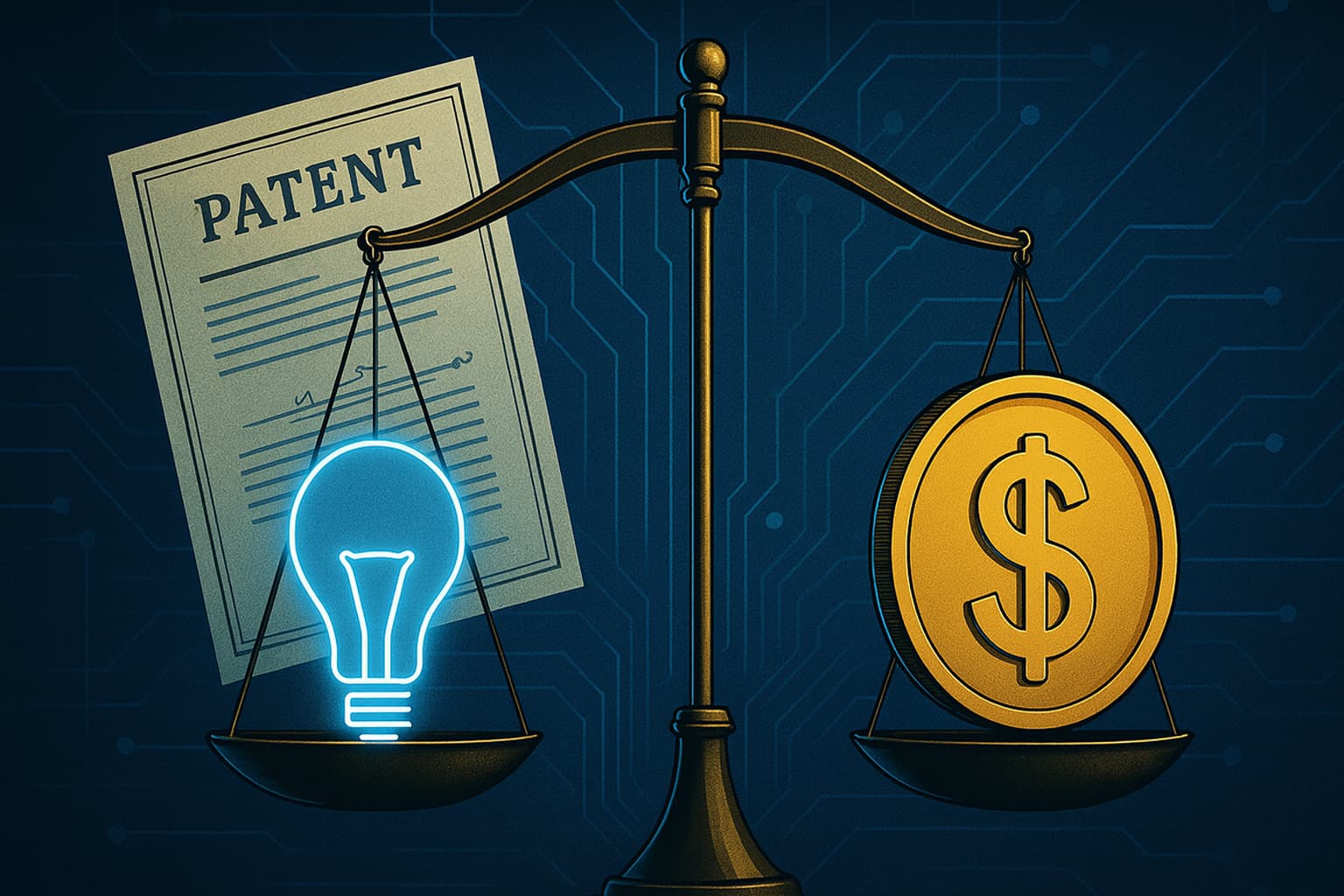
The intellectual property landscape has always mirrored broader industrial and legal dynamics. Today, we are witnessing a pronounced shift back toward stronger patent rights. This paper examines how regulatory and technological trends, including the rollback of Inter Partes Review and the rise of AI, are reshaping IP value. With the pendulum swinging in favor of patent holders, businesses and legal teams must reassess their IP strategies accordingly.
Patent systems have evolved over centuries. Their roots trace back to medieval guilds and early European exclusivity laws, such as Venice’s 1474 statute. In the United States, the 1790 Patent Act laid the groundwork for a formal patent office, later strengthened in the 19th century. Patents were once a mark of respect; notable examples include Andrew Carnegie seeking Bessemer steel patents.
By the 1980s, as Japan’s manufacturing threatened U.S. dominance, American companies successfully lobbied to strengthen IP protections, leading to a new Court of Appeals and improved litigation success rates. However, the rise of the internet economy and the surge of small-company litigation against larger firms led to pushback. This culminated in the 2012 America Invents Act and widespread use of IPR, which invalidated 80% of challenged patents. Today, under new leadership, the USPTO is reversing these trends, signaling a return to strong patent enforcement.
Independent of legal shifts, numerous strategic tools have consistently helped increase IP value. Building large patent portfolios creates licensing leverage, while combining patents with trade secrets preserves competitive advantage. Broad or tightly scoped claims can be crafted depending on whether enforcement or licensing is the goal.
Inventing around one’s own patents, obtaining formal valuations, and designing assets with monetization in mind all help create transactional value. Storytelling, framing IP in business, market, and technological context, also elevates perceived worth. Today, AI accelerates all these processes, reducing time and cost while improving strategic clarity.
Litigation historically served as both a deterrent and a business weapon. A lawsuit can disrupt operations, trigger invasive discovery, and drain resources. Venue shopping, litigation financing, and non-practicing entities have all added to the complexity. For patent owners, securing standing and precise documentation is essential.
But IPR had become a dominant countermeasure. It allowed defendants to invalidate patents cheaply, undermining plaintiffs’ leverage. The recent administrative rollback of IPR, therefore, marks a pivotal change. Patent holders can once again rely on their rights being enforceable in court without the looming risk of swift invalidation.
The most significant shift comes from within the USPTO. Under the direction of Commissioner John Squires, the IPR process is being substantially curtailed. The office is reclaiming discretion over its docket, reducing serial petitions, and aligning more closely with district court decisions. Reforms also aim to prevent duplicative challenges and discourage manipulation by foreign actors.
This change restores reliability to issued patents. Patents are no longer seen as easily breakable. Instead, they regain their role as powerful assets. This regulatory change has immediate implications for how companies protect innovation, manage IP portfolios, and approach enforcement.
Patent owners must now recalibrate. With IPR no longer shielding defendants, enforcement costs will rise, but so will potential returns. Higher average settlements, greater win rates, and increased threat of damages change the litigation calculus.
Licensing becomes a more viable alternative as the “sue me” mentality weakens. Litigation financing is likely to rebound, enabling smaller players to pursue infringement. Copycats face heightened risk, making patents more effective deterrents. In this environment, companies can treat patents not only as protective tools but as core financial assets.
AI is reshaping the entire IP lifecycle. It improves patent search, drafting, and examination. On the litigation front, AI can analyze prior art, simulate trial outcomes, and generate real-time infringement alerts by scanning product releases.
Automation in discovery and damage modeling will further reduce costs and improve accuracy. Predictive analytics will support better strategic decisions, both in enforcing and defending IP. As litigation becomes more data-driven, AI becomes a central player, empowering smaller firms and enhancing the overall efficiency of the legal process.
The pendulum of IP value has swung decisively toward stronger patents. With the retreat of Inter Partes Review, companies must revisit their IP strategies. Patent portfolios will carry more weight, licensing will be revitalized, and litigation will once again shape competitive dynamics. Enabled by AI, the IP landscape is not only more favorable for patent holders but also more sophisticated and fast-moving. The time to act on these changes is now.

Work with ipCapital Group
From invention to monetization, our team has guided 2,000+ engagements across the full IP lifecycle. Start with a free 30-minute discovery call.

Written by
John Cronin