
General-purpose speech models mishear kids, and static filters cannot tell a four-year-old from a ten-year-old. That gap is the next moat.
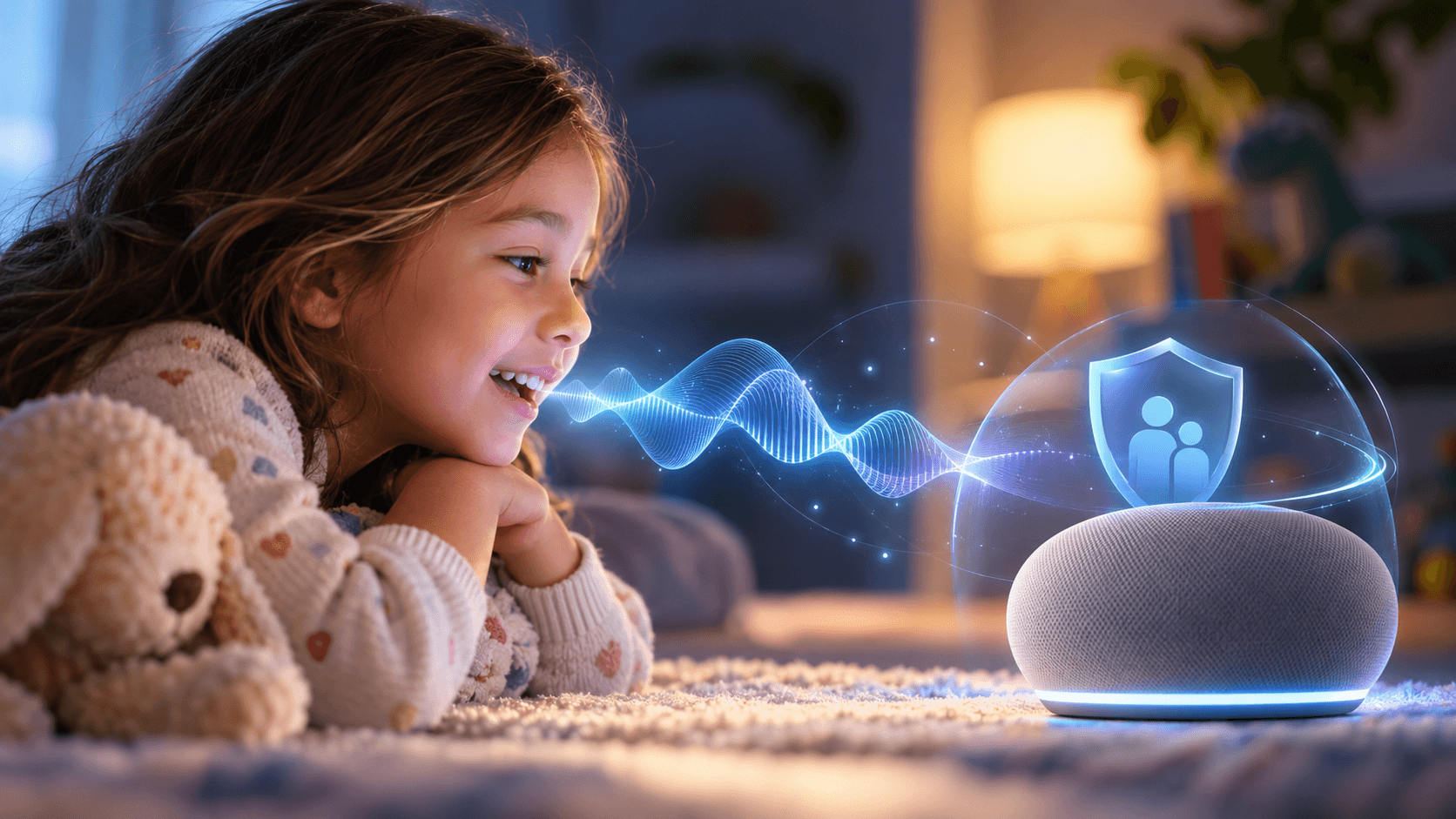
Voice is moving out of adult assistants and into children’s worlds. The models that got it there were never designed for those users, and that is the opening.
Games, smart TVs, connected toys, and branded characters are all adding voice. That shift exposes something uncomfortable: general-purpose speech recognition and moderation were built for adult speech, adult context, and adult privacy expectations. None of those assumptions hold for a six-year-old.
This sits alongside the control-layer argument we made in The Next Defensible Layer in Voice AI. That piece was about consent telemetry and latency in enterprise telephony. This one is about a different population of users and a different failure mode: the system mishearing the person in front of it.
Two signals matter. Voice and content safety portfolios are concentrated in a handful of large players. And the segment that matters most for children stays close to empty.

Read that comparison carefully, because the scopes differ. The top two rows are what individual companies hold. The bottom row is an entire field over six years. A whole category of filings is smaller than one incumbent’s shelf, and child-specific voice safety is thinner still.
Concentration among incumbents signals commitment, which means the category is real. The emptiness underneath it means the defining work has not been claimed yet.
The gap is not a better chatbot. It is a system that hears children accurately, moderates in real time against developmental stage, and respects privacy by default across toys, games, and screens. Those four things are one engineered surface, not four features.

Acoustic and language models trained on children’s voices, tuned for pronunciation variance, fillers, and mixed-language utterances, with on-device modes for toys and low-latency streaming for games and TVs.
Moderation that adapts to developmental stage, with context carryover and refusal or redirect strategies appropriate to each band rather than one global policy.
Data separation by default, consent-aware pipelines, and ephemeral processing that minimizes retention, paired with real-time routing of risk signals to a caregiver or brand safety team with enough context to act.
Timing advantages do not last. The incumbents’ concentration shows commitment, the gaming moderation slice shows only a dozen patents worldwide in six years, and child-specific voice safety is leaner again. Meanwhile regulatory pressure is rising and premium brands increasingly require partners who can be audited. That combination is a window to define the standards, the developer stack, and the licensing model before the category fills in.
When a category is thinly patented, speed and precision both matter. These positions convert product decisions into durable advantage that shows up in partnerships, valuation, and exit options.
The pattern reaches well past children’s products. Any domain with regulated or vulnerable users eventually splits away from general AI into a safety-native stack of its own.
In every case the moat has the same shape: perception conditioned on the domain, guardrails sensitive to context, privacy-first data flows, and escalation at the workflow level. Those inventions are usually already inside the roadmap, just never labeled as IP.
Do not ship voice for kids as a feature. Build an age-aware safety system that brands can trust, developers can adopt, and counsel can defend. Treat recognition, moderation, privacy, and escalation as one engineered surface, then turn its core mechanics into strategic IP.
If you lead a brand, studio, platform, or an emerging voice team, the fastest route to durable advantage is aligning product architecture and IP around the same goal: trust for families.
Bigger models do not hear a four-year-old any better. Different models do. Talk with ipCapital Group about invention harvesting and strategic filing around age-aware voice safety.
Work with ipCapital Group
From invention to monetization, our team has guided 2,000+ engagements across the full IP lifecycle. Start with a free 30-minute discovery call.

Written by
John Cronin