
This paper evaluates the Intellectual Property of the submarine cable space. In the intricate landscape of the submarine cable sector, a deeper exploration into the realm of Intellectual Property (IP) trends unveils crucial insights. This paper evaluates the IP landscape that underpins the dynamic developments within the region’s submarine cable domain. The strategic positioning of Brazil, Colombia, Chile, and Argentina as key landing points and hubs for submarine cable networks accentuates the significance of understanding the IP trends shaping this transformative sector.
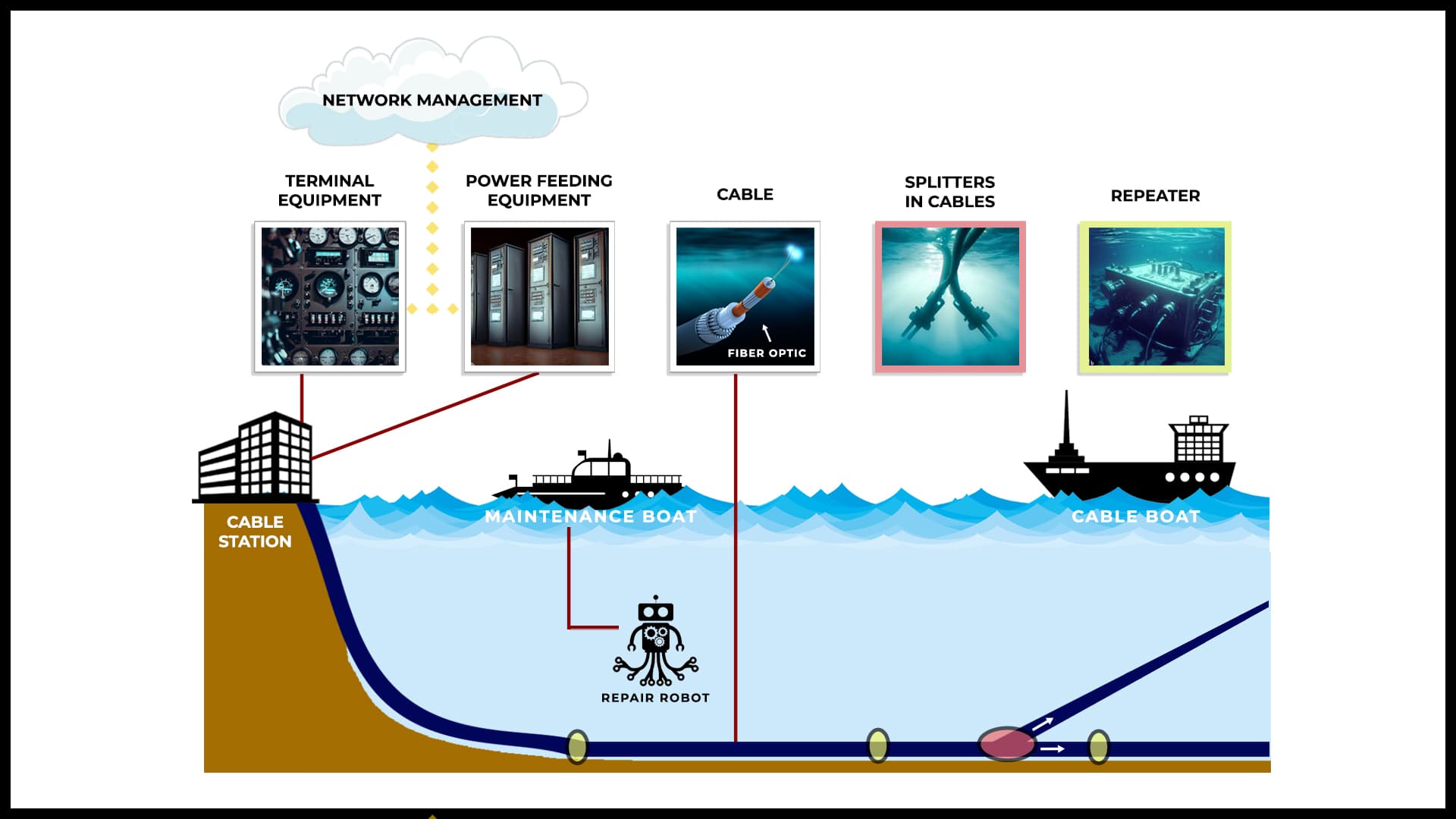
Figure 1
By John Cronin
To Download a Free PDF of this Article Click Here (email required).
This paper evaluates the Intellectual Property of the submarine cable space. In the intricate landscape of the submarine cable sector, a deeper exploration into the realm of Intellectual Property (IP) trends unveils crucial insights. This paper evaluates the IP landscape that underpins the dynamic developments within the region’s submarine cable domain. The strategic positioning of Brazil, Colombia, Chile, and Argentina as key landing points and hubs for submarine cable networks accentuates the significance of understanding the IP trends shaping this transformative sector.
The Study Area
Our analysis delves into a comprehensive examination of diverse critical technology areas within the submarine cable space. Figure 1 illustrates these areas as focal points of scrutiny to unravel the intricate tapestry of IP dynamics that impact the sector.
Data Analysis
This foundational exploration reveals a staggering 4,062 patent filings within our initial search. We discuss how these searches are done to give the reader proper context.
In a bold drive towards innovation, the sector’s growth trajectory stands out, manifesting a remarkable 7-fold increase in patent filings for a decade. This surge mirrors the vibrant landscape of high-tech innovation, placing the submarine cable sector on par with other groundbreaking technological domains we have studied for over 25 years! The profound implications of this exponential growth encapsulate heightened innovation, robust research and development undertakings, intensified competition, emerging complexities, and a burgeoning market potential.
China’s Influence and Jurisdictional Insights
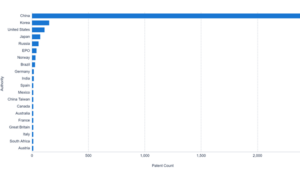
The geographical distribution of patent filings, a compelling narrative of IP dynamics, unveils China’s dominant position. With China at the helm, South American nations find themselves outside the top 5 countries in patent filings, underlining their formidable challenge in securing a prominent role in this evolving landscape. This delineation based on Jurisdiction echoes the diverse legal frameworks that underpin patent laws. These frameworks encapsulate exclusive rights, jurisdictional scope, extraterritorial reach, and intricate cross-border enforcement mechanisms, shaping the interaction between innovation and legal protection.
Moreover, the territorial limitations of patent rights, whether within the confines of a nation’s borders on international waters or below ground, intertwine with the submarine cable industry’s landscape. The intersection of intellectual property, technology, and maritime regulations forms a unique matrix that impacts territorial waters and beyond.
An IP Strategy to leverage business models and investments is crucial!
In this multifaceted journey through IP trends, our exploration offers a comprehensive vantage point to grasp the strategic significance of IP within the submarine cable sector across Brazil, Colombia, Chile, and Argentina. The interplay between innovation, Jurisdiction, and territoriality provides a roadmap to navigate the evolving landscape that connects these nations as strategic landing points and hubs in the dynamic world of submarine cable networks.
The Study Parameters
The IP space we evaluated was to look at various critical areas of the submarine cable space. Figure 1 provides an example of those areas.
Performing a patent search using keywords involves searching through patent databases and documents to identify relevant patents based on specific terms or phrases related to the subject you are interested in. This search aims to find existing patents that may be relevant to your area of interest. The process can be broken down into several steps:
Data Analysis
Our basic search found 4062 patent filings that resulted in 2431 single families. “Patent families” represent a group of related patents that protect the same invention across different countries or regions. They help inventors and legal professionals understand the international scope of patent protection and navigate the complexities of filing patents in multiple jurisdictions. Comparatively, this represents a large drive towards innovation as a technology space.
Innovation growth is 7X.
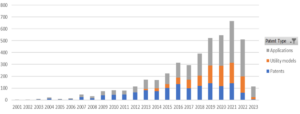 The rate of invention in this space is 7X, which competitively puts this up with some of the other very high-tech areas. A significant increase in filed patents, such as 7 times (7x) in 10 years, generally indicates an innovative and dynamic technology space. This level of patent growth suggests several key points:
China takes the lead.
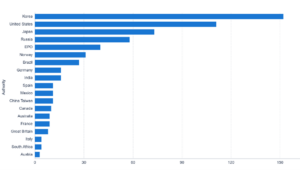
The patent filings in the study by Jurisdiction show that it is dominated by China, with Korea, the USA, and others as distanced followers. South American countries do not have enough patents to make the top 20 countries—the distribution of patent filings based on different jurisdictions (countries or regions) in a particular study. Chinese patents were 1100 filings of a total of 4062 patents.
How does Jurisdiction impact IP studies?
Patent laws and regulations can vary significantly from country to country, but some general principles apply to the rights granted by patents and their Jurisdiction. When it comes to making, using, and selling patented inventions, here is an overview:
How does the Jurisdiction of patents affect the submarine cable industry in South America?
The territorial scope of a patent is generally limited to the political boundaries of the country where the patent is granted. This means that the patent rights apply only within the borders of that specific country and do not extend beyond its geographic limits, whether into space, international waters, or underground.
Here is how this applies in different physical scenarios:
Here is how IP affects territorial waters in South America
Here is how IP affects territorial waters in South America
Patents in South America
Brazil and Chile have 40 or so patents, and all other areas of South America have one or none. Therefore, there is a huge White Space in South America for patents.
Patents vs Assignee
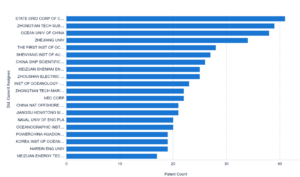
A look at the top assignees shows the top 20, mostly an array of various types of Chinese companies.
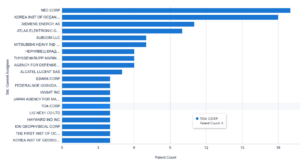
If we take China’s Jurisdiction out of the data, we have companies like NEC, Siemens, Atlas, and LG as top players, as well as institutions of countries.
Patents By Technology Areas
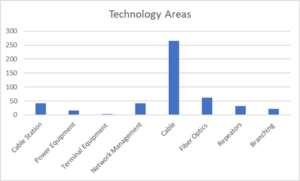
By analyzing the technology areas of Figure 1, we find the overall patent distributions below. Cables have by far the most patents (266) compared to the following areas with 50 or so patents. Fiber optics, within cables, have 61. Interestingly, repeaters have far less patents -32. There is little to none on power and terminal equipment.
It is evident from an IP strategy that one could judiciously patent areas in the right countries and technologies to enhance a business model and investment in that country. What is required is an in-depth IP Strategy![1]
[1] IP Strategy is a service of ipCapital https://www.ipcg.com/thought-leadership/invent-anything-podcast/
Episode 21 – IP Strategy for Businesses and Inventors
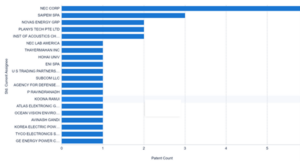
Specific Technology Areas By Assignees
2. Power Equipment – 15
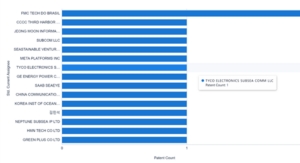
3. Terminal Equipment – 3
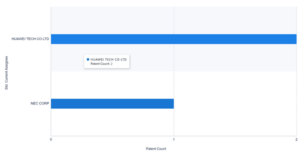
4. Network Management – 42
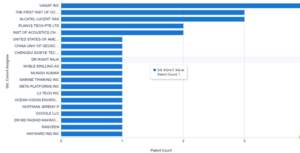
5. Cable – 266
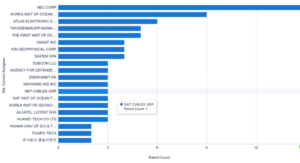
6. Fiber Optics – 61
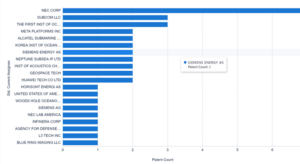
7. Repeaters – 32
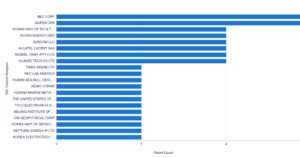
8. Branching – 21
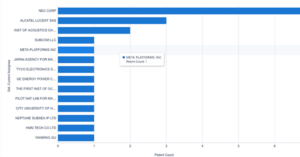
9. Maintenance – 8
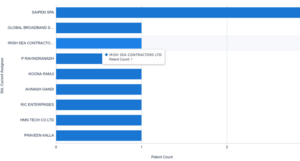
Conclusion: Unveiling the Strategic Landscape of Submarine Cable Intellectual Property Trends
This paper is a comprehensive journey into the world of Intellectual Property (IP) within the intricate realm of submarine cable networks. The exploration of IP trends in this transformative sector has yielded critical insights that underscore Brazil, Colombia, Chile, Argentina, and South America’s strategic importance as pivotal landing points and hubs for submarine cable networks. As the global digital landscape expands, these nations’ roles are further emphasized, making understanding IP dynamics paramount.
Delving into the depths of the study, our analysis illuminated the diverse critical areas within the submarine cable space. This holistic examination provided a lens to decode the intricate IP tapestry that shapes this technological sector’s evolution.
The data analysis phase uncovered a trove of intellectual property in 4,062 patents. This investigation not only shed light on patent databases but also highlighted the significance of patent families in understanding the innovations contributing to the dynamic submarine cable industry.
A standout revelation emerged in the form of a remarkable 7-fold increase in patent filings over a decade, placing the sector at the forefront of high-tech innovation. This exponential growth signifies intensified innovation, research and development endeavors, competitive dynamics, and burgeoning market potential. Notably, the dominance of China in patent filings underscored a broader trend that shapes the landscape of submarine cable intellectual property.
The interplay between jurisdiction and intellectual property laws was a pivotal aspect explored in this paper. The territorial boundaries defined by patent jurisdiction intricately weave into the unique matrix of submarine cable networks, maritime regulations, and global commerce. Whether in international waters, outer space, or underground exploration, understanding Jurisdiction’s impact on patent protection is vital to grasping the industry’s complexities.
As we conclude this multifaceted journey through IP trends, it becomes evident that deciphering the intellectual property landscape is paramount for South American nations aspiring to thrive in the submarine cable domain. The strategic positioning of Brazil, Colombia, Chile, and Argentina converges with the technological advancements, jurisdictional nuances, and patent dynamics that pave the way for innovation and connectivity in this dynamic sector.
Note: The data and further analysis can be obtained by sending a request to ipCapital Group via info@ipcg.com.
Work with ipCapital Group
From invention to monetization, our team has guided 2,000+ engagements across the full IP lifecycle. Start with a free 30-minute discovery call.
Written by
ipCapital Group