
A four-layer software IP strategy for SaaS CTOs: what is patentable in 2026, what to keep secret, and how to capture inventions every sprint.
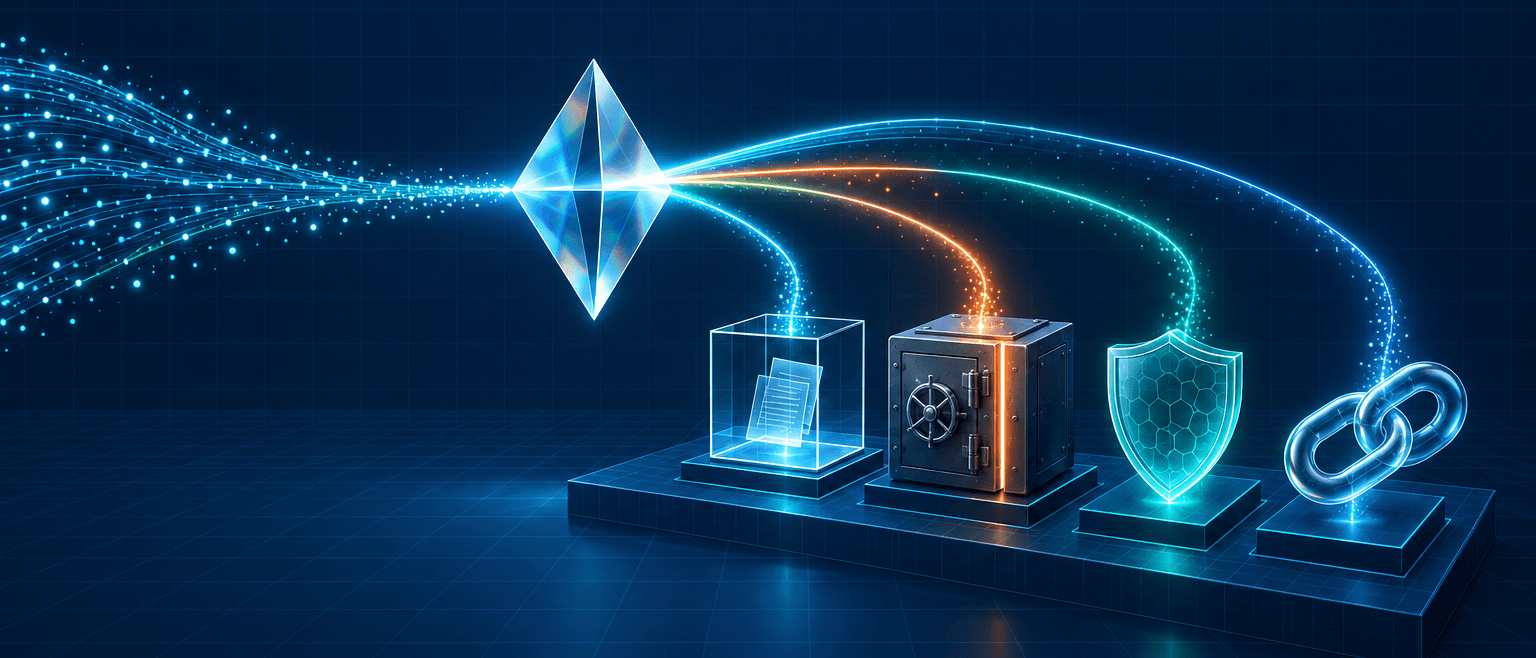
For a SaaS company, protecting software is a sorting problem before it is a filing problem. Every asset that matters goes into one of four layers (patents, trade secrets, copyright, contracts), and one question picks the layer: could a competitor see it, or work it out, from the shipped product? Patent what they could see, keep secret what they could not, and do the sorting inside the sprint while the invention is fresh. Software patents are more available in 2026 than the post-Alice folklore suggests, but only for claims aimed at the machinery.
Our rule for software is short: patent what competitors could see or figure out from your shipped product, and keep secret what they could not. If the innovation shows in the interface, the network traffic, the API behavior, or decompiled code, it belongs on the patent side, because secrecy is not available and a patent is the only thing that stops the copy. If it lives server-side and never leaves your infrastructure, it is trade secret territory, and a patent would publish it for nothing. Copyright and contracts do quieter work underneath, and open-source hygiene protects all four.
For AI assets the sort is usually easy. Model weights, training data, and pipeline design are not observable from a product’s outputs, so they sit on the secret side; a serving architecture a competitor could infer from traffic and latency may belong on the patent side. The open-weights version of this call is in Open Weights Are Really a Trade Secret Play, and a later post in this series goes deeper on the patent-versus-trade-secret decision for AI assets. It is a per-asset decision, not a company policy.

The 2014 Alice decision made “do it on a computer” claims ineligible, and years of rejections followed. The examiner side has since moved, in steps the USPTO’s eligibility page tracks. The July 2024 AI update added Examples 47 to 49, where training a neural network with backpropagation is ineligible as bare math, and the same network claimed as the mechanism that drops malicious packets in real time is eligible because it improves network security. An August 4, 2025 memo told examiners not to stretch the “mental process” category to steps a human mind cannot practically perform. Ex parte Desjardins, made precedential on November 4, 2025, found claims to training a model on new tasks without forgetting earlier ones eligible, crediting reduced storage and system complexity; a December 5, 2025 memo wrote that into the MPEP and told examiners not to wave off “generic computer components” without asking whether they improve the computer. The Director’s December 4, 2025 memo pointed applicants to an optional Rule 132 declaration for evidence of the improvement.
Now the counterweight. Courts do not work for the USPTO. In Recentive Analytics v. Fox (April 18, 2025) the Federal Circuit held that claims which apply established machine learning methods to a new data environment are ineligible, and the Supreme Court declined to hear it in December. Venable’s read for 2026 is that software and AI patents which merely automate an existing method on generic computing are targets for early motions to dismiss, and we agree. Congress may change the statute someday; the Patent Eligibility Restoration Act had its first full Senate Judiciary hearing on July 14, 2026, with no markup scheduled as of August. Plan on the law as it stands.
Our read: a software patent is worth filing in 2026 when the claim covers a particular solution to a technical problem rather than the idea of a solution. What changed is that an examiner is now told to look for it.
Our approach in software is to aim claims at the system-level architecture and the data flows, because that is where the technical improvement is visible and where infringement can be detected. Product features and business logic rarely qualify; the machinery underneath them often does: scaling mechanisms, storage layouts, synchronization schemes, compression, routing, scheduling, and training-pipeline work. The Director’s memo makes the same point from the examiner’s chair: when a claimed system changes the architecture itself, how information flows rather than only what it does, that can satisfy eligibility.
This has two consequences for the disclosure. The attorney needs architecture and data-flow diagrams, the specific step that differs from standard practice, and performance evidence; Nixon Peabody’s January 2026 note suggests comparative testing against the prior approach as declaration evidence. And the claim needs a detectability story: if you could not tell from outside a competitor’s codebase that they use it, you cannot enforce it, and it belongs in the trade secret layer anyway.
For most software startups we think one to three carefully chosen filings on genuinely technical inventions is right, at $8,000 to $15,000 or more in attorney drafting each and a full life cost of $25,000 to $40,000 or more per U.S. patent. Groovyweb argued in February 2026 that patents give most SaaS and AI apps weak or no protection because enforcement costs millions. Right about models and data; on the rest the lens is wrong. In the engagements we support, a small software portfolio earns its keep in acquisition diligence and counter-assertion when a larger competitor comes calling, long before anyone thinks about a trial.
In our experience the inventions a SaaS team ships mostly go unrecorded, and a written disclosure is the cheapest item in the whole stack. Our guide to writing an invention disclosure for your attorney covers the six elements and what software disclosures need on top.
The federal definition is broad. Under the Defend Trade Secrets Act, a trade secret can be a program, code, method, technique, process, or procedure, provided you took reasonable measures to keep it secret and it has value from not being generally known or readily ascertainable. In the SaaS companies we work with, the list usually includes model weights and training sets, the data pipeline and its tuning, prompts and evaluation sets, ops runbooks, and infrastructure relationships. WilmerHale took the same view of AI assets after Recentive in April 2025, with a caveat we would repeat: courts expect you to identify the secret with reasonable particularity, and “our proprietary AI” is not a trade secret.
Reasonable measures is where we see SaaS companies fail. What works in practice is a registry, meaning a short list of the secrets, a named owner for each, access controls and logging, exit interviews, and one review a year. A program that exists on paper but not in practice can be unprotectable exactly when you try to enforce it, because courts examine what you actually did. A focused program starts around $5,000; most first engagements are five-figure, fixed-scope projects.
The 2026 specifics matter here. AI tools are a disclosure channel: in Trinidad v. OpenAI (N.D. Cal., January 2026), a plaintiff who developed his claimed secrets inside ChatGPT lost his DTSA claim because he had voluntarily disclosed them to OpenAI. An enterprise tier with retention limits and a written policy on what may be entered are increasingly treated as part of reasonable measures. And California’s AB 2013, in force since January 1, 2026, requires a public summary of training data for generative AI offered in the state. Ask counsel what your summary must say before you count on training data as a secret.
Copyright is automatic and cheap, and in our experience it protects less than engineers expect. The Copyright Office’s Circular 61 says it plainly: copyright does not protect the functional aspects of a computer program, meaning its algorithms, formatting, functions, logic, or system design. It stops literal copying, and the deposit rules let you register while blocking out trade secret portions of the code. For AI-generated code it is thinner still. The Office’s January 2025 report concluded that purely AI-generated material is not protected and that prompts alone do not provide sufficient control. Vorys’s February advice is practical: keep records of prompts, iterations, and human edits, and treat prompting strategies and fine-tuning data as trade secrets.
Contracts make the secret layer real. Everyone who touches the stack needs an assignment agreement (clean title is one of the first things we see diligence teams check) and confidentiality terms that include the whistleblower-immunity notice the DTSA requires; leave it out and you risk losing exemplary damages and attorney fees against that person, contractors included. We went through the patent-plus-trade-secret combination on Invent Anything episode 47: IP Power Play: Dominate Your Industry with the Patent-Trade Secrets.
Black Duck’s 2026 OSSRA report found open source in 98 percent of the 947 codebases it audited and license conflicts in 68 percent, up from 56 percent the year before. Of the organizations it surveyed, 76 percent check AI-generated code for security but only 54 percent check it for IP and license risk. For a SaaS company the license that matters most is AGPL: section 13 requires a modified version that users interact with over a network to offer them the corresponding source, which is a trade secret problem, not a compliance footnote.
The other direction matters too. Shipping code, a talk, and an open-source release can each count as public disclosure. In the U.S. an inventor’s own disclosure opens a one-year grace period; outside the U.S. a grace period is six to twelve months where one exists, and many countries have none. We put one review step, a pre-release IP gate, in front of launches, talks, and open-source releases.
A yearly patent review does not fit two-week sprints; by the time it happens the inventors have shipped three more things and forgotten the hard part of the first. Our capture hooks for agile teams are deliberately light:
Then measure it like any pipeline. The KPIs we recommend for CTOs include disclosure-to-filing conversion (near 100 percent usually means nobody is selecting) and cycle time from disclosure to decision, because a pipeline that takes two quarters to say no kills its own supply. A written disclosure typically costs about $7,000, closer to $5,000 in volume, and in our experience a strong one cuts prosecution time by 30 to 40 percent.
Sort your top ten assets with the observable question and write the layer next to each; in the sorting sessions we run, that afternoon usually moves two or three items from the patent list to the registry, and one the other way. Put the sprint checkbox and the pre-release gate in place with a named owner. Then fix the paper: assignment agreements for everyone, the DTSA notice in the confidentiality terms, a written AI-tool policy, and a license inventory. Eligibility, license terms, and enforcement are calls for your patent attorney; we work alongside counsel on the strategy side.
Talk with our team about an invention-capture session with your engineering team; a few hours with the people who built the hard parts is the fastest way we know to find the first filing worth making.
Work with ipCapital Group
From invention to monetization, our team has guided 2,000+ engagements across the full IP lifecycle. Start with a free 30-minute discovery call.

Written by
Seth Cronin